



Recently, OKet® conducted specialized training on OPC Automatic Nozzle Verification devices and the accompanying app for staff from the Safety and Equipment Management Department and the Laboratory Center of PetroChina Tianjin Branch. Through hands-on instruction, the training empowered the company to enhance the precision and efficiency of its metering management.
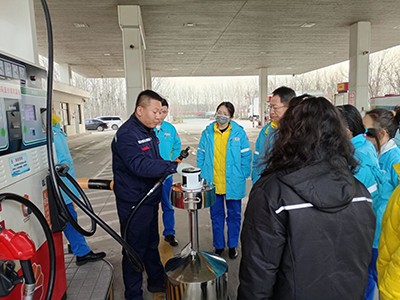
OKet® training instructor Li Dekun tailored the session to the company's daily metering verification needs, closely aligning with the requirements of the national verification regulation JJG443 'Fuel Dispensers'. He provided in-depth explanations covering device principles, operational procedures, data management, and key compliance points.
The training focused on demonstrating the practical operation of the OPC Automatic Nozzle Verification device. Built on a standard metal measure, the device is equipped with high-precision temperature and liquid level sensors, automatically collecting fuel temperature and level data to calculate nozzle accuracy. It achieves a temperature measurement precision of ±0.1°C and a level measurement accuracy of 0.1% F.S., precisely meeting the core requirements of JJG443: indication error within ±0.3% and measurement repeatability not exceeding 0.1%. The device aligns with the high-precision standards required for statutory verification while providing reliable support for routine inspections. By eliminating traditional manual reading errors, a single operator can complete the full verification process.
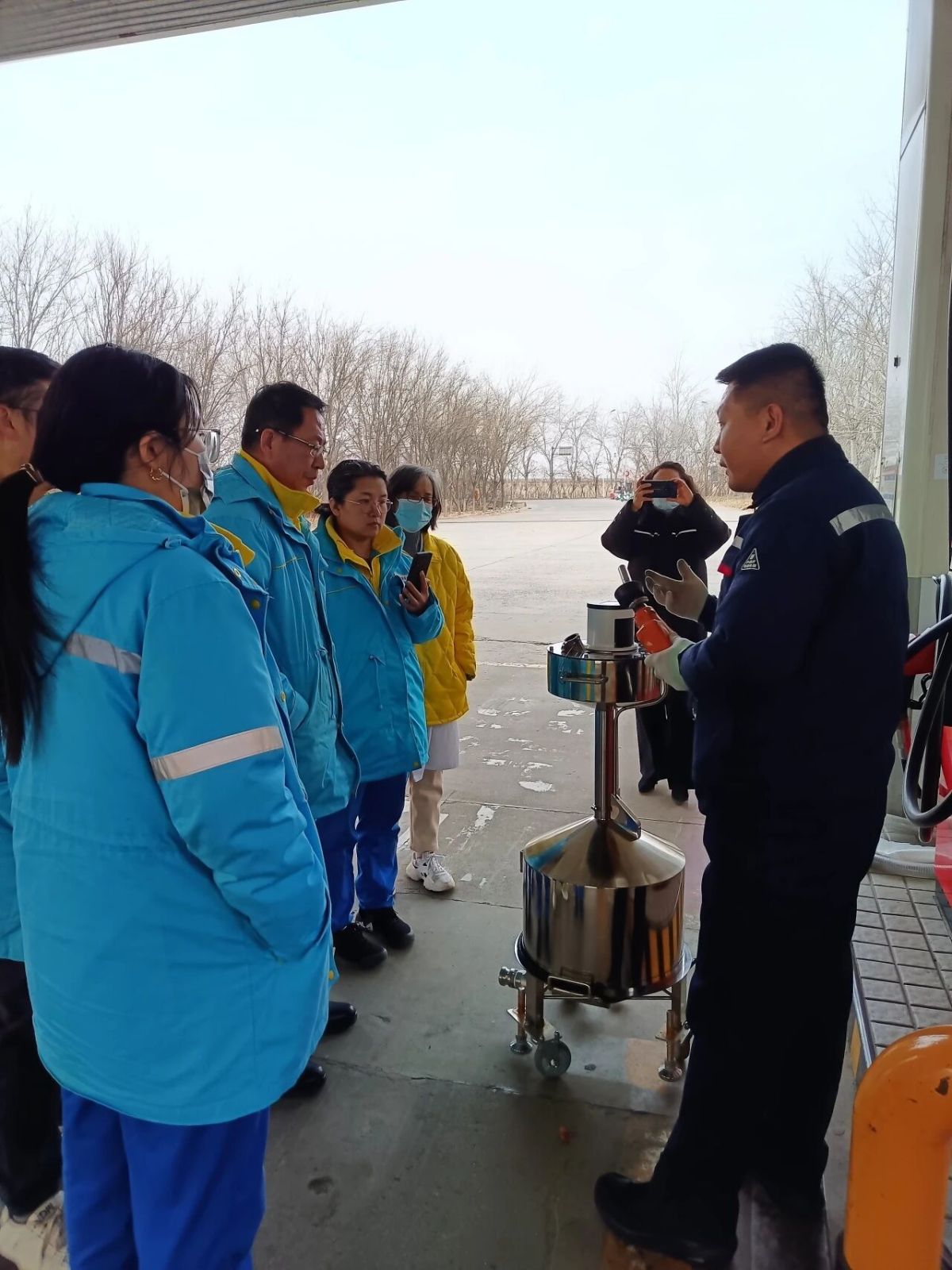
During the training, the instructor provided detailed guidance on the daily use and precautions of the device. He not only thoroughly explained the core differences between the automatic verification processes for quantitative and non-quantitative fueling, helping participants master operational key points for different scenarios, but also emphasized critical hands-on standards:
1. Pre-verification immersion: Containers must be fully pre-wetted to ensure data accuracy.
2. Built-in leveling: The device comes with a self-leveling function, eliminating the need for manual leveling before use and simplifying the operation process.
3. Nozzle compatibility: Due to differences in gasoline and diesel nozzle sizes, when using a gasoline nozzle, the limiting device must be accurately inserted into the nozzle to ensure safe fueling and precise measurement, laying a solid operational foundation for statutory verification, self-inspection, and risk assessment tasks.
Regarding the accompanying app, the instructor demonstrated functions including real-time viewing of verification results, data storage, and export in Excel or image formats. He also introduced the digital management capabilities enabled by connecting the app to a data platform, such as automatic reminders for upcoming nozzle verification and alarms for accuracy exceeding limits, supporting unified control of fuel nozzle metering data across the enterprise.
Finally, participants actively raised questions about metering issues encountered in daily work, and the instructor addressed each question with practical case studies, fostering an interactive and engaging on-site atmosphere.
The successful training not only allowed participants to become proficient in operating the device but also earned recognition and praise from the Laboratory Center and the provincial company. Customers gave positive feedback on the convenience, accuracy, and adaptability of OKet®'s OPC Automatic Nozzle Verification device, noting that it effectively addresses frontline metering challenges. OKet® will use this opportunity to continue refining product performance and optimizing service experience, leveraging practical technology and service to enhance efficiency and quality in metering management